Nova Scotia’s capital has brought together science, industry, and philanthropy to create a world-leading centre for ocean alkalinity enhancement, as the marine carbon removal technology sets out to prove itself even amid regulatory uncertainty.
In late April 2026, a group of guests invited by US non-profit Carbon to Sea, arrived to the shores of Halifax, Nova Scotia to attend the organisation’s annual convening. Washington, DC, was the typical location for the gathering, but in recent years, Nova Scotian waters had bloomed with startups and research advancing marine CO2 removal (mCDR), or the promise of using the ocean to remove CO2 from the atmosphere. Now, a few years in, invitees deliberated how to take such efforts to the next level.
mCDR encompasses several methods of carbon removal that essentially boil down to enhancing the oceans’ ability to absorb and potentially store CO2. The world’s top climate scientists at the Intergovernmental Panel on Climate Change (IPCC) have deemed CDR critical to avoid dangerous climate change. Carbon to Sea’s mission is to help answer questions around a specific type of mCDR known as ocean alkalinity enhancement (OAE), where the ocean’s ability to absorb CO2 increases as its pH swings from acidic to basic, upon the addition of an alkaline material.
It’s a nascent method of mitigating climate change with ardent – and unique – backers. Carbon to Sea began as a philanthropic initiative housed at a venture capital firm in 2022, seeded by Meta’s former chief technology officer, Mike Schroepfer. In an interview with MIT Technology Review following the organisation’s launch in June 2023, he said OAE stood out among other carbon removal methods as simple, scalable, and the least understood. Schroepfer had a fervent belief in funding the proof of concept, and was willing to take the risk that it didn’t work.
Today, as an independent philanthropic initiative, Carbon to Sea funds scientists, companies, and policy strategists to determine if OAE is safe, effective, permanent, and possible.
“All of the indications continue to look promising,” said Miriam Zitner, general manager for Canada at the organisation, in an interview with Carbon Pulse.
During the spring gathering, attendees visited the research laboratories and toured the sites generating carbon removal credits. It was an important pulse check for Halifax, which Zitner called the world’s leading region for OAE R&D. Standing in the sea salted-air in steel-toed boots, on-site of active projects, let attendees feel the “stickiness” of the industry on-the-ground, she said.
But the region’s hub is fighting for legitimacy, both at home and abroad.
While OAE in Canada’s harbours is regulated under domestic law, no branch of government has regulation specific to this technology. Current activity is monitored under a patchwork of environmental rules, and operations farther out to sea are illegal both in the eyes of Canadian and international law. The IPCC has refused to assess OAE as a method of carbon removal until more research demonstrates that it can effectively and safely remove CO2 from the atmosphere.
Yet operations are already underway in Halifax, with companies generating carbon credits, vying for buyers, and further investments. How the city moves forward is important for Carbon to Sea, which aims to set up OAE R&D hubs around the world.
The region could either set a precedent or serve as a lesson learned.
How the Halifax hub happened
In 2022, Carbon to Sea came to Halifax to understand the regulatory environment for OAE. At the time, there was limited research to speak of, and the organisation was just beginning to branch out into Canada. It enlisted the help of the Ocean Frontier Institute – an ocean research and training effort, based out of Halifax’s Dalhousie University – to chart pathways to growing the industry in the region and identify possible roadblocks along the way.
“We contracted out a legal firm to help us do that work, and it made it seem that there was a lot of regulatory red tape,” Ronnie Noonan-Birch, science and policy manager at the institute, told Carbon Pulse.
At the time, Noonan-Birch wondered if any OAE activity would kick off in light of the analysis. Four years later, the region has the world’s largest OAE ecosystem – a handful of companies, multiple universities, and dozens of scientists pursuing the prospect of a new carbon removal industry.
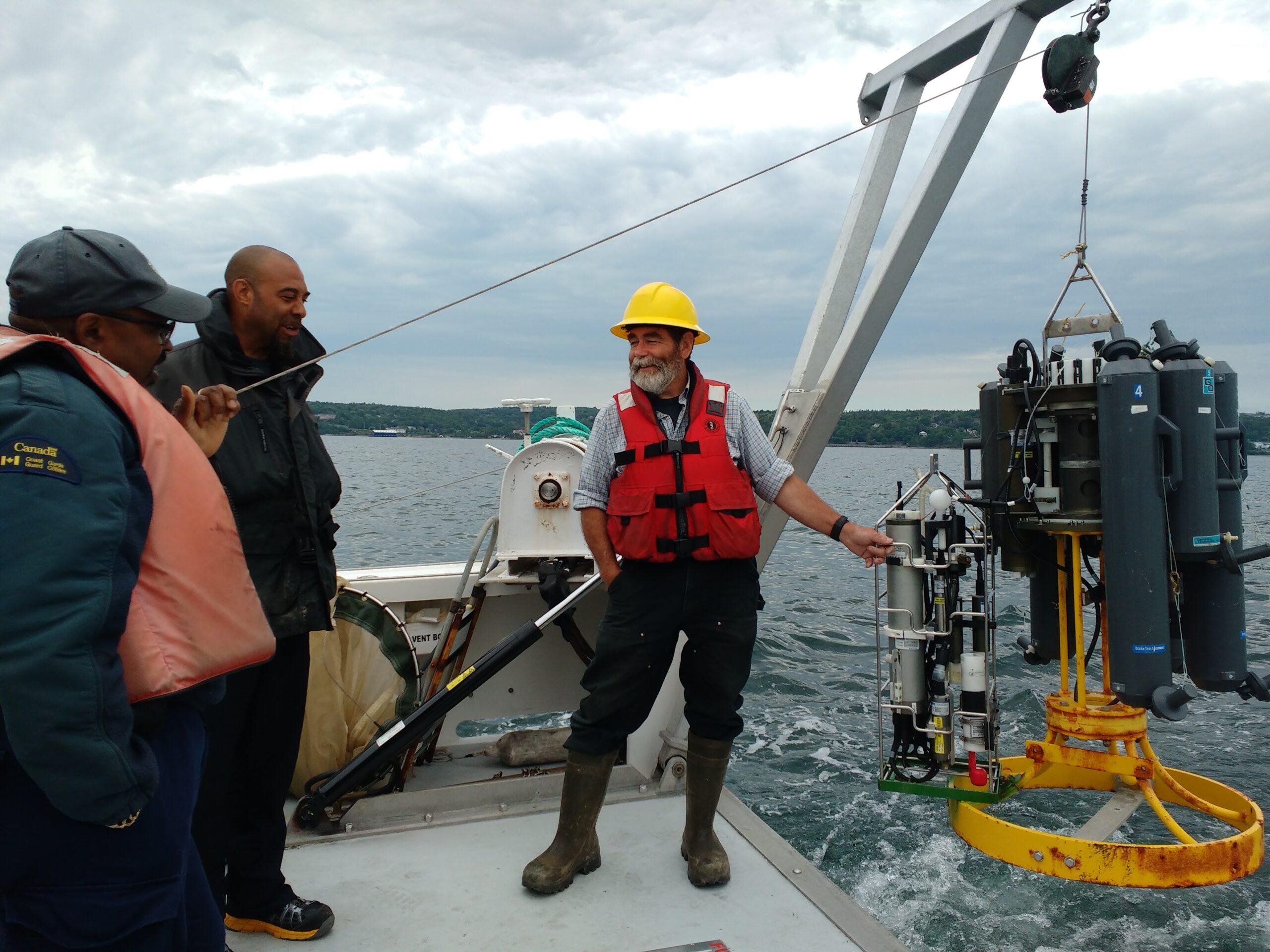
Members of the Ocean Frontier Institute’s Research Implementation Unit working in Halifax’s Bedford Basin, conducting ocean observation measurements. Credit: OFI
The Halifax hub didn’t happen overnight. Decades of ocean science, by leading researchers at local universities, created a baseline understanding of ocean conditions – on temperature, salinity, and how water moves in the regional basin, said Noonan-Birch.
“All of those are factors that need to be measured when doing mCDR experiments, and of course, having that baseline means you have something to compare it to – so once an addition is made, you can understand how those parameters change based on the past 20 years of data.”
These scientific foundations were a strong pull for OAE company Planetary, Mike Kelland, co-founder and CEO told Carbon Pulse. Kelland entered the sector after a decades-long career creating technology startups, his most recent being in software. He co-founded Planetary with Greg Rau, a scientist who spent decades researching carbon cycling and biogeochemistry, including work on OAE in the 2000s.
Early in the company’s life, they were debating which coast of Canada to operate on – whether Planetary would go west to the Pacific, or east to the Atlantic. Kelland met a staff member at Innovacorp, a state-owned corporation in Nova Scotia that was investing in ocean businesses. The encounter set off a cascade of introductions to the world’s top ocean scientists, based in Halifax. Kelland was impressed by how many ocean science PhDs had been “minted” in the Halifax harbour.
Those foundations were coupled with a warm welcome from the business community, the CEO added. One organisation, the Halifax Partnership, told him to never cold call anybody – the group would introduce them to “literally anybody in town”.
“All of the pieces were there. I think we were a little bit of a catalyst,” Kelland said, looking back.
Planetary embarked on the world’s first OAE dispersal, or the controlled release of alkaline materials into the ocean, in Halifax in 2023. Today, it continues to add an alkaline material to outfall water from the Tufts Cove power plant, which spills out into the local harbour. The slightly-alkaline water has an enhanced ability to uptake CO2, measured via sensors and models that calculate CO2 removal.
A number of other CDR companies have since started up in the region, a few of which use similar methods or chemistry.
One startup, pHathom, is developing technology to capture CO2 from biomass power plants and dissolve it in seawater for permanent storage in the ocean. Andrew Ray, pHathom co-founder, came across part of this process when he was Planetary’s first institutional investor via Innovacorp. With Planetary’s permission, he decided to spin out the technology with pHathom.
Another company, CarbonRun, was born out of decades of efforts to respond to acid rain in Nova Scotian rivers, which was affecting local salmon populations. Co-founder Eddie Halfyard said it took 10 years to demonstrate that adding alkaline material, lime, to such rivers could remediate local ecosystems – something he’d witnessed over the course of his academic career as a fish ecologist. He began to understand that methods of alkalinity enhancement had significant carbon implications in 2019, and launched CarbonRun with others two years later.
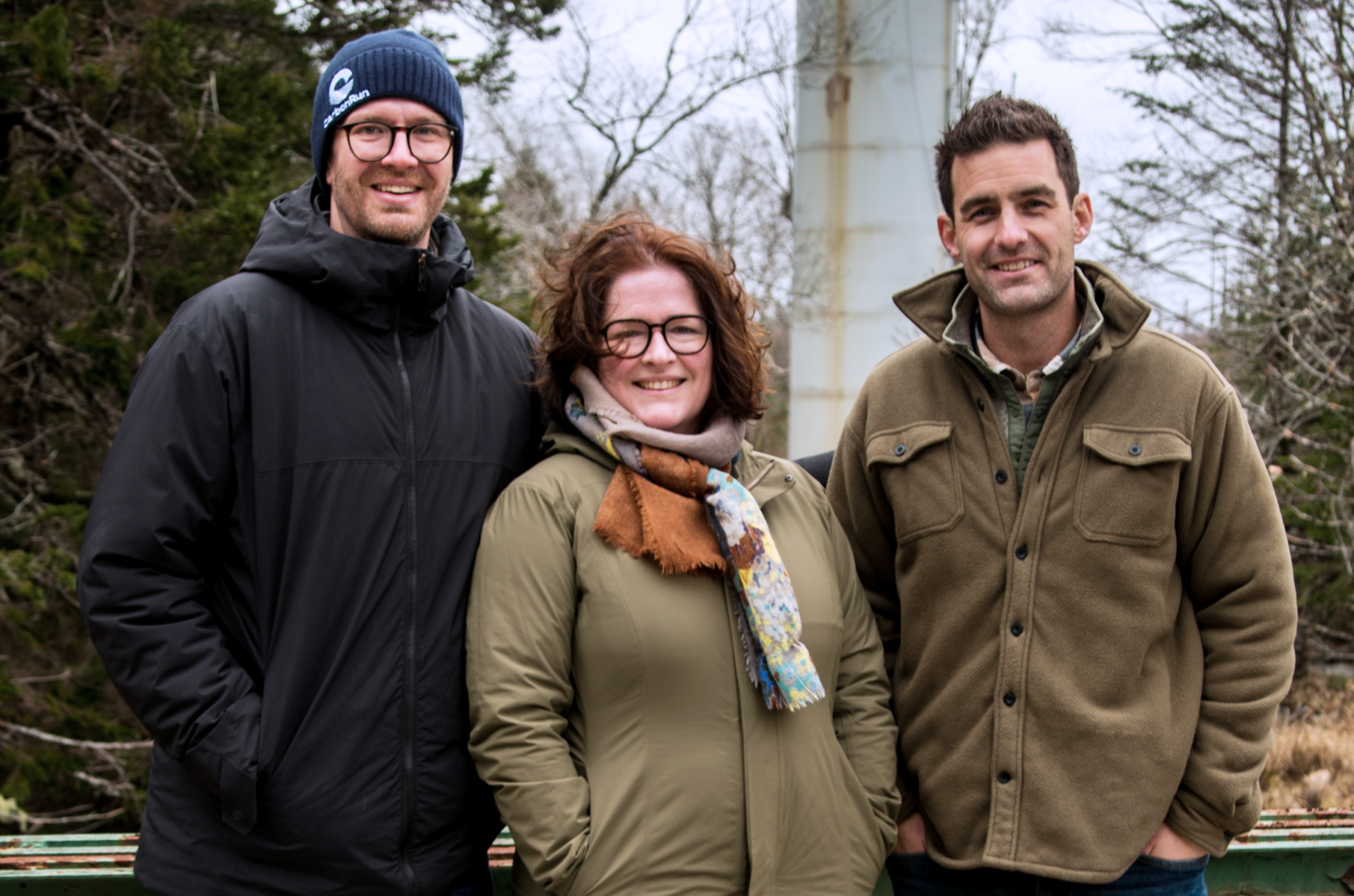
CarbonRun founders (L–R) Luke Connell, Shannon Sterling, and Eddie Halfyard stand in front of the Killag lime doser, operated by the Nova Scotia Salmon Association since 2017 in Sheet Harbour, Nova Scotia, as part of an Atlantic salmon conservation programme.
How credible is OAE?
The local scientific community has benefited from the emergence of this ocean-climate nexus. It’s brought new funding to do new science, not just from Carbon to Sea, but via grants from the federal government and partnerships with other research institutions around the world, such as GEOMAR, the Helmholtz Centre for Ocean Research Kiel in Germany, or the University of Tasmania in Australia.
“It’s really fun to be here, because there’s such a big ecosystem, and it’s really, really evolved,” said Chris Algar, associate professor in the Department of Oceanography at Dalhousie University, in an interview.
Algar studies sediment biogeochemistry in the local Bedford Basin, where part of his research now includes the study of potential impacts of OAE. He pointed to other laboratories at Dalhousie that are also doing independent research on the back of OAE operations in the Halifax Harbour.
The academic research goes hand in hand with the industrial operations. For Planetary’s Chief Technology Officer Will Burt, the trust between the company and Dalhousie scientists stems from his days as an oceanography PhD student at the university, with many of his former colleagues still there.
“Dalhousie… doesn’t want to be seen as helping, necessarily, yet collaboration is important – you need to have open communication,” he told Carbon Pulse.
Burt said the company meets with university researchers nearly every week to provide operational updates, and if the researchers are interested in doing a particular type of study that requires a change in Planetary’s operations, that’s possible.
“They have the expertise and capacity to do much more complex work [than we can],” he said, pointing to measurements of environmental DNA, for example – the genetic material left by organisms in their environment – which is an expensive exercise that Planetary does not take on.
“When I meet with the Dalhousie team every week, we go around the room, and if they say, ‘Hey, we’re seeing this signal come through on our monitoring that looks a little bit confusing or concerning,’ that’s what our company needs to know. We can make decisions based on that.”
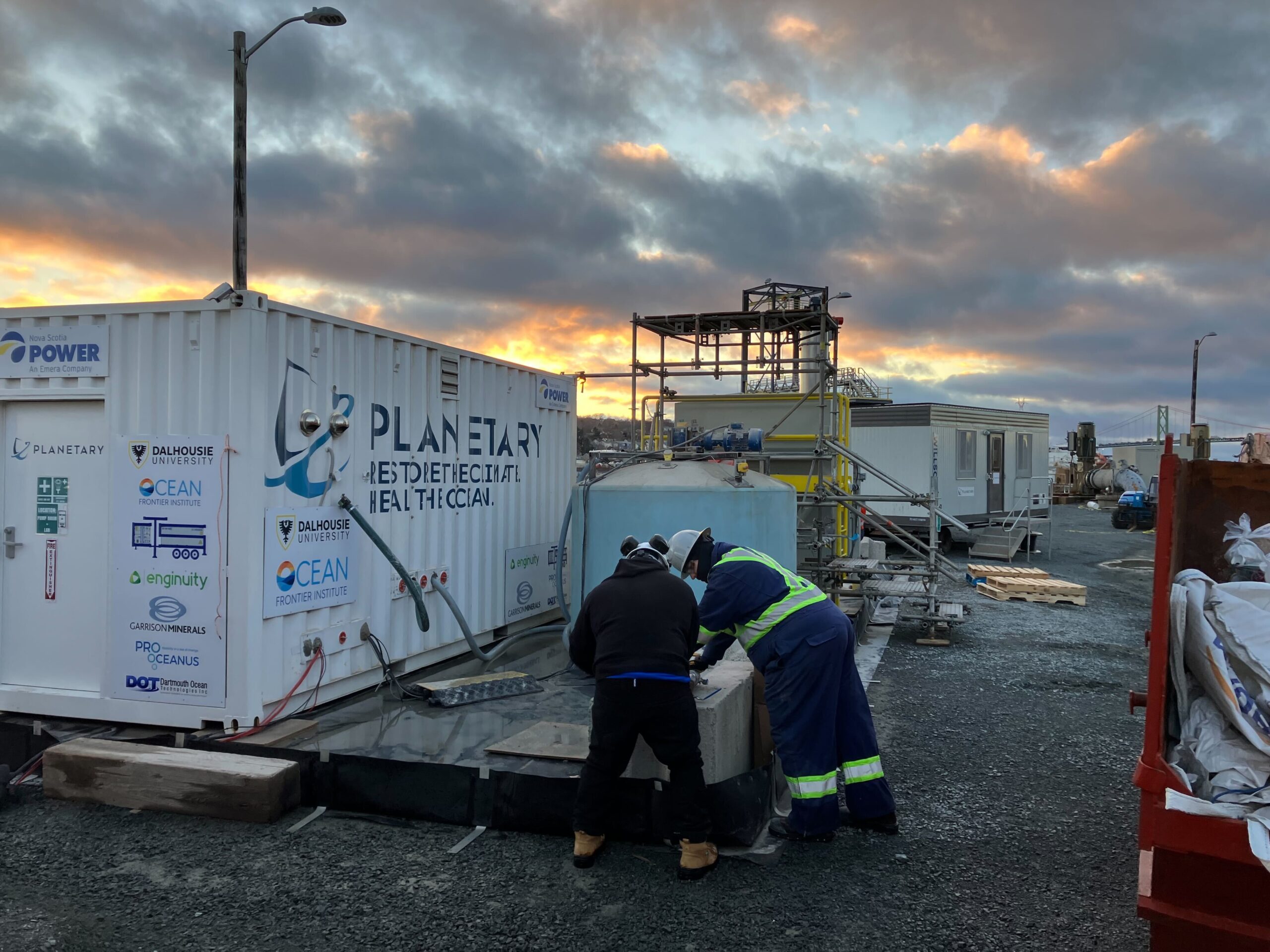
Planetary’s operations in the Halifax Harbour. Photo: Planetary
Most mCDR company science is otherwise focused on proving that a particular method actually removes CO2 from the atmosphere, and does so safely. That’s established through monitoring, reporting, and verification (MRV) measures, developed by companies that set the rules for generating carbon credits, such as Isometric.
Burt acknowledged that this is itself an active area of debate. He argued that Planetary’s role is to trust that the MRV measures are robust enough for the company to focus on feeding the right data to the carbon credit-generating methodologies.
David Ho, an oceanography professor at the University of Hawaii, was more critical.
“It’s way too early to be selling credits and claiming that we have any certainty about anything,” Ho told Carbon Pulse.
Ho said the methodology used to calculate Planetary’s carbon credits relies on the use of a single model to determine the volume of CO2 removal. If another model was used, it would generate a different value, he suggested. Scientists at the IPCC run many models and take the average as a fair result, he added.
Ho is a lead author for an upcoming IPCC methodology report on the latest CDR science across land, air, and sea. The report could serve as independent proof that the emergent industry is an effective way of removing CO2 from the atmosphere. However, a report outline finalised in late 2025 left OAE out of the table of contents.
“You have to ask, why is that? If OAE is really the promising one that everybody’s putting money into, why isn’t it in that methodology report?” asked Ho.
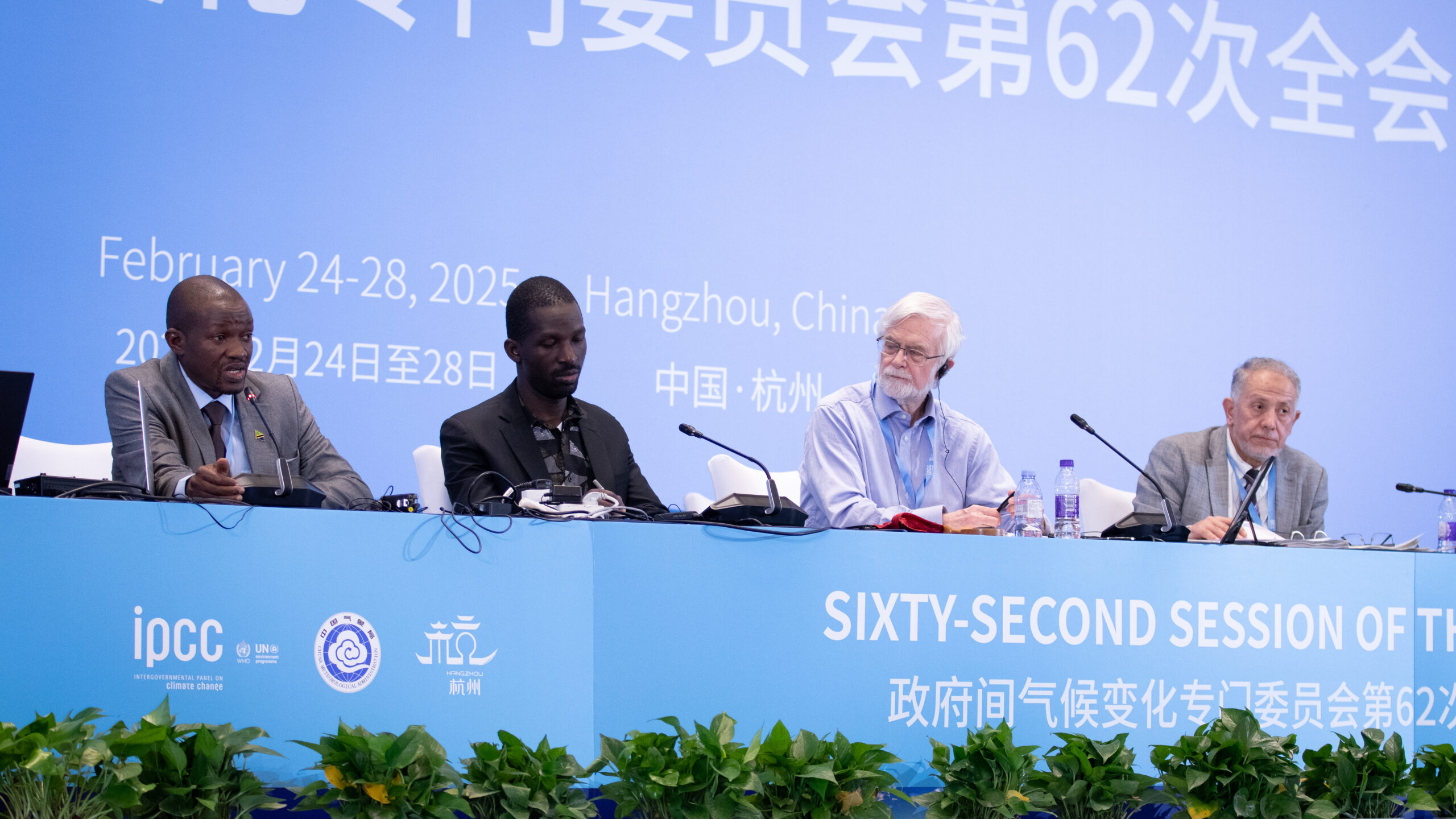
Members of the IPCC Bureau, who provide guidance to the panel on scientific and technical aspects of its work, helm the group’s 62nd session in Hangzhou, China, in Feb. 2025. Credit: IPCC Secretariat
In Feb. 2025, when the IPCC’s member governments met to discuss what would be in the new CDR report, OAE was initially on the list.
“When we saw that, we immediately said no,” Chantal Roggeman, one of Belgium’s delegates to the IPCC, told Carbon Pulse. “It’s absolutely not ready… It’s very difficult to monitor and measure how much CO2 you will sequester in the end, because it’s indirect.”
She flagged the same model-based calculation process that Ho criticised.
Roggemann said the inclusion of OAE in the report would effectively endorse the technique as an approved method of carbon removal.
“People said, ‘No, the IPCC does not assess the quality [of CDR methods], it just gives the cookbook; it just gives the recipe for a cake. It doesn’t say if the cake is good or not.’ Okay, but if a recipe for a cake is in an IPCC report, you’re going to assume that it’s a good cake.”
The IPCC, as with any UN body, is structured in such a way that items must be agreed upon by consensus among its 195 member states. And Belgium’s position was that there is not enough research to recognise OAE as a viable CDR method just yet.
Belgium put forward a proposal to omit OAE from the report. It was supported by France and Germany, Roggeman said. But nations ultimately failed to agree, and the discussion was deferred to Nov. 2025.
There was a lot of pressure at the next meeting to nail down the outline, because the report was due in 2027. By that point, most nations were impartial to the inclusion of OAE and just wanted to get an outline to the authors, Roggeman said.
When it came to the vote, many small island states “had woken up” and joined the EU dissenters in taking a stance against the approach, she said. Ultimately, OAE was omitted from the table of contents. The only mCDR method to be assessed in 2027 will be CO2 removal from water already processed by land-based or coastal facilities.
“Our position is basically the precautionary approach. We think that there is simply not enough information yet to really see this as a solution,” Roggeman summed up.
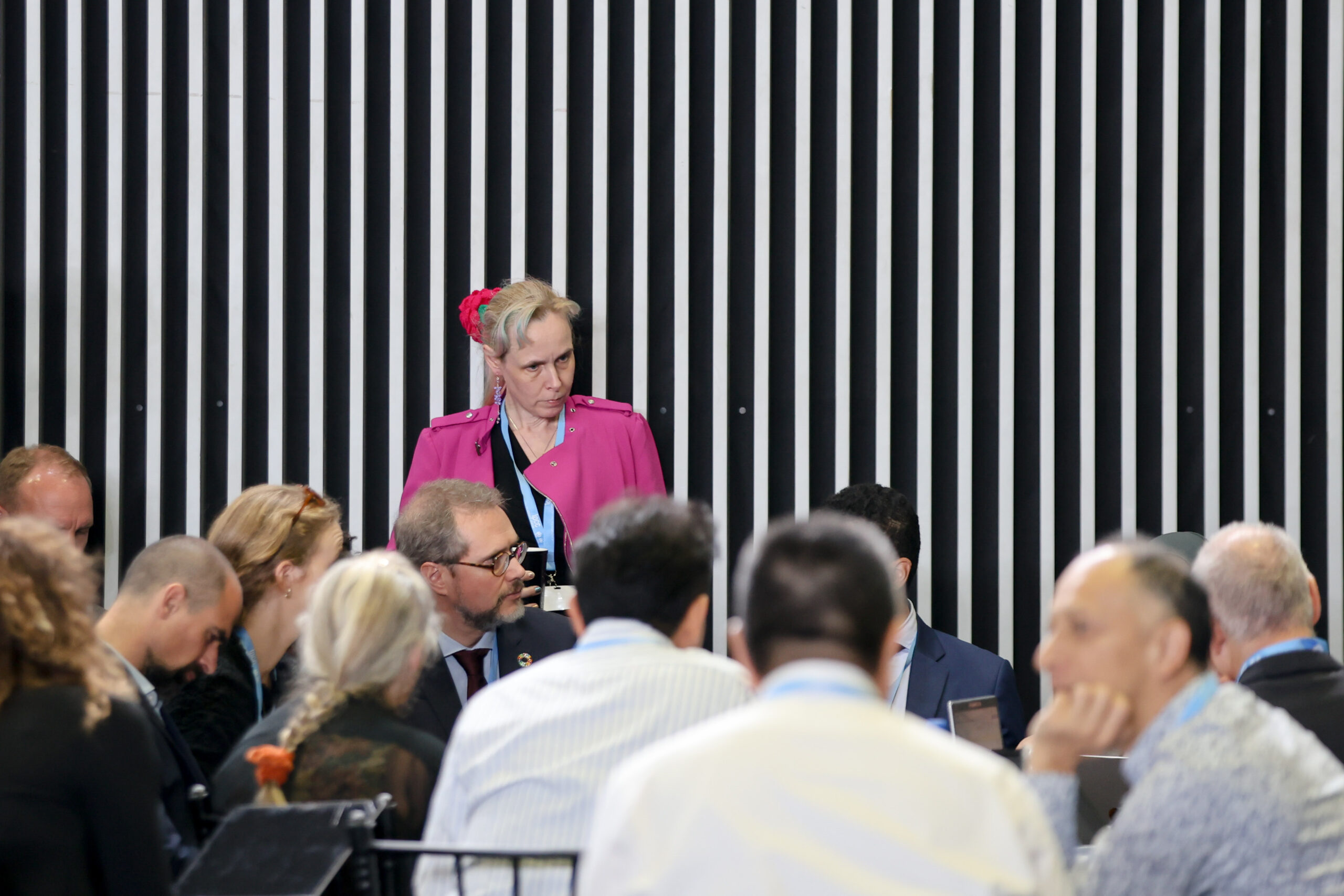
Centre, Chantal Roggeman, member of Belgium’s international climate negotiations delegation, pictured at the IPCC’s 63rd meeting in Oct. 2025. Photo by IISD/ENB | Anastasia Rodopoulou
On the mCDR scale of confidence, Belgium is at one end and Shopify at the other. The e-commerce platform backed the earliest mCDR credits, including those generated by companies in Halifax. It and a few others – bank JPMorgan, and software company Workday – have been willing to take a risk on an early technology that predates global scientific and regulatory confidence.
Admittedly, mCDR credits are an expensive route to offsetting emissions, even for tech companies that pull billions of dollars in annual profits. Though credit prices are not widely disseminated, the average price per credit ranged from $250-$1,100 in late 2025, according to voluntary carbon market data provider AlliedOffsets.
It’s a worthwhile investment, said the early purchasers. Shopify is a member of Frontier, the leading global buyers’ club of carbon removal credits. Led by financial technology company Stripe, it committed to $1 billion in purchases from 2022-30, including credits from Halifax companies CarbonRun and Planetary.
For Frontier, the IPCC implies a need to scale CDR up to 3.8 bln tonnes by 2050 to limit global warming to 1.5C. Roughly 10,000 tonnes of CO2 have been removed to date. “The goal is to send a strong demand signal to researchers, entrepreneurs, and investors that there is a growing market for these technologies,” the organisation said of its efforts on its website.
For Sara Seck, a professor of law at Dalhousie University, there is a question over how the use of mCDR relates to the Paris Climate Agreement, which seeks to limit global warming. That agreement underpins the carbon markets that could enable mCDR. But governments are signatories of the Paris Agreement, not the companies that are funding it. There is a question of whether these corporate efforts could actually enable continued dependence on fossil fuels.
“Are they putting the money in because they think it’s important to try to enable what will be a necessary industry in the future?” asked Seck. “Because it’s pretty ridiculous to stay stuck to an industry that’s pumping stuff up and then having to do all this industrial activity to take it down.”
She added that while there is broad recognition of scientific research in the sector, there is also a gap in governance studies. Lawyers can advise on compliance pathways, but they cannot answer the broader question of how to enable “responsible mCDR”.
“What are the best regulatory pathways that will enable not just mCDR companies to benefit, but that will enable responsible mCDR? That goes to addressing the purpose of this entire industry, which is to address the climate crisis, not to enable a lack of transition away from fossil fuel dependence.”
Regulatory vacuum
OAE companies fall into the crosshairs of other international laws. Although the addition of an alkaline substance to the ocean is billed as a climate solution, the practice falls under the watch of international treaties, the London Convention and the London Protocol, that were created to address the dumping of waste at sea. Under those laws, OAE is illegal.
Nevertheless, countries that have signed up to those treaties are in active discussions about how they apply to OAE, as well as other methods of marine geoengineering, because these laws were not designed to regulate these practices to begin with.
In the eyes of Planetary’s Kelland, these treaties have no relevance to the company’s operations.
Planetary actually operates on land, not at sea, Kelland argued, because it adds alkaline materials to seawater at the Halifax Harbour. He wants the Canadian government to publicly affirm that OAE conducted in harbours and rivers falls under domestic regulation, not international law. The US Environmental Protection Agency has already made a statement of the sort, he said.
Extending the London Convention and London Protocol to Planetary’s work amounts to a threat to Canadian sovereignty, Kelland suggested.
“We’re giving up our ability to regulate our own lands, and handing that off to the international community. If we were to slip into that… I think that’s a really dangerous precedent to set,” he said.
Still, it’s not clear how OAE is regulated in Canada. There is no national industry-specific regulation – no obvious guardrails, no clear limitations to operations – even for project proponents. Planetary’s Burt said the company was operating “out on a limb for so long, trying to be safe” before it found a provincial regulatory programme that its operations could fit under.
The reality is that OAE activities are currently shoehorned into domestic and provincial laws that were not built to address the sector, said Mike Kofahl, a staff lawyer at East Coast Environmental Law, in an interview with Carbon Pulse. This includes Nova Scotia’s Environment Act, which prohibits the deposit of substances into the environment that could cause harm, and Canada’s Fisheries Act, which prevents pollution in Canadian waters to protect fish and fish habitats.
Nova Scotia’s Department of Environment and Climate Change only regulates land-based activities, it said in a statement. While it’s monitoring OAE, it is premature to know if existing frameworks are suitable or if additional tools are needed, the department added, with a spokesperson pointing to the federal government for guidance on operations in marine waters.
“[We are] working with other federal departments to explore options for an overarching regulatory mechanism that would be consistent with the London Protocol and allow for research on mCDR,” the department said in its statement.
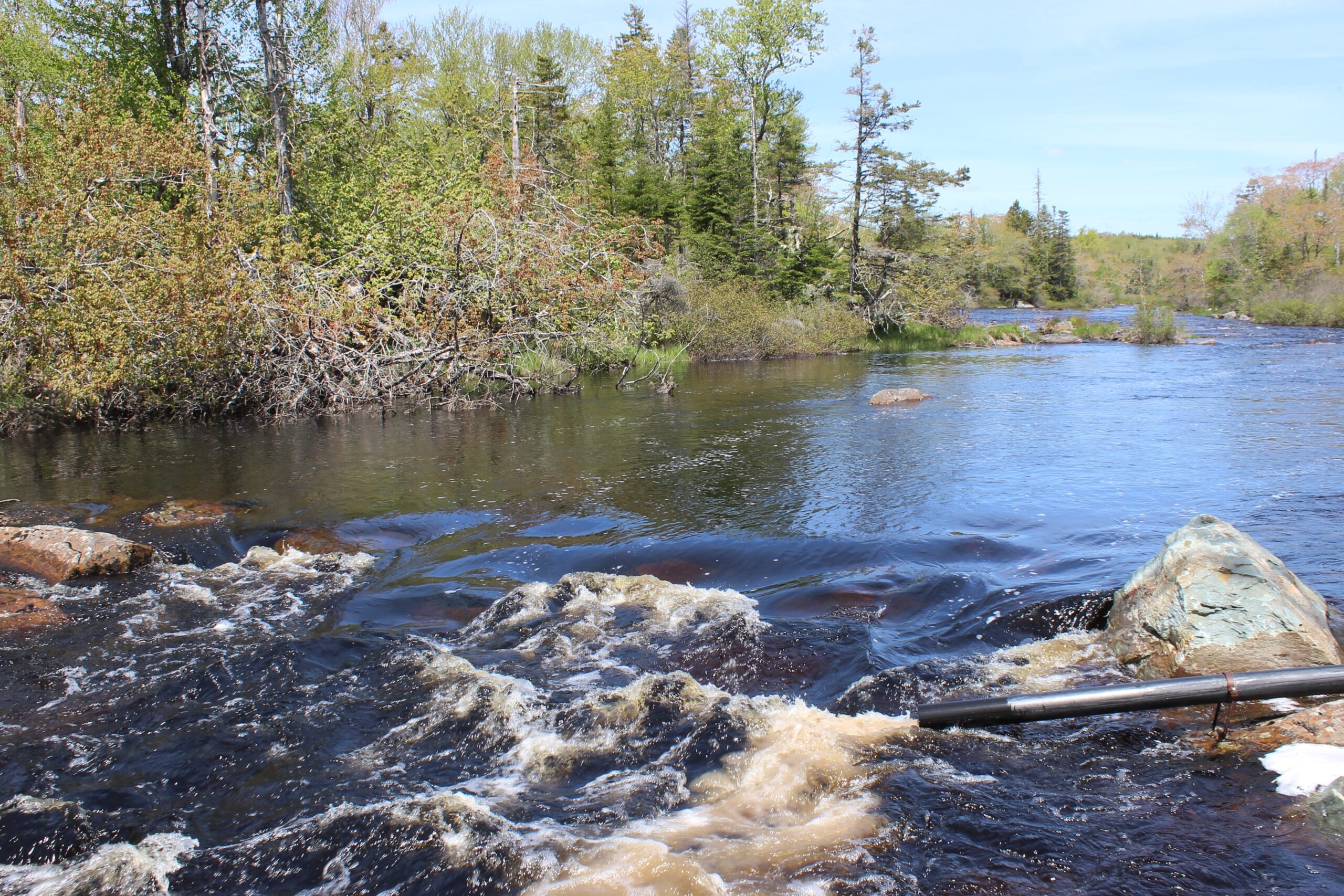
The Moser River, Nova Scotia, in front of CarbonRun’s newly installed lime doser. A pipe adds natural powdered limestone to a set of rapids, where it disperses and dissolves downstream to reduce acidity and capture carbon. Credit: CarbonRun
Cautious engagement
The uncertainty around mCDR, at domestic, provincial, and international levels, is stunting the sector in some ways. Canada has moved forward on other forms of carbon removal. The federal environment ministry has published a suite of protocols to certifiably demonstrate that 1 tonne of CO2 has been removed from the atmosphere. There are no ocean-based methods on the list, but other approaches via forestry and direct air capture are included.
Canada is also buying CDR credits from other Canadian companies. The country’s Treasury has committed to purchasing C$10 mln worth of credits from a list of CDR pathways – none of which involve the ocean, or bodies of water.
It’s an issue that recently came across the desk of Senator Colin Deacon, appointed to represent Nova Scotia in 2018. Prior to his appointment, Deacon founded and ran several businesses, some of which commercialised technology coming out of universities. He is now in a position to advocate for minority interests in Canada’s Parliament.
“I know how hard it is to take an innovation, invention, or piece of scientific knowledge and turn it into a commercial enterprise that adds value and manages risks appropriately,” he told Carbon Pulse.
Deacon was one of several senators of the Senate Committee on Fisheries and Oceans who studied mCDR and reported on their findings in February. One of the recommendations echoed Kelland’s call for regulators to claim sovereign jurisdiction over the regulation of land-based OAE.
“In Ottawa, our regulators are not required to consider opportunities lost in the creation of a regulation or the lack of creation or modernisation of regulation. That, for me as an entrepreneur, is really, really troubling.”
For Deacon, the inaction from Canadian policymakers is the “biggest risk” to mCDR in the country.
“Having no policy in a situation is, in fact, a policy,” he said.
In the absence of direct regulation and policy on OAE, communities that stand to be impacted by the burgeoning industry are engaging cautiously. Ken Paul, a member of the Wolostoqey Nation, has spent the past few decades shaping ocean policy and action in Atlantic Canada in several capacities, ranging from fisheries to offshore wind. As Paul put it, he didn’t go looking for mCDR. The industry found him via a cold call from a company looking to do community engagement in Halifax.
It took him a long time “to accept that this work needs to be done”, he told Carbon Pulse. “The thing that kind of flipped the switch for me was that somebody pointed out to me that even if we stopped all our carbon consumption today… there’s still all of this legacy carbon, that’s up in the atmosphere that we have to deal with.”
He dipped in and out of work in the sector, attending conferences often as the only Indigenous person in the room and the sole attendee to ask about the impact of mCDR on fish health. More recently, however, and after several months of conversation with a colleague at his company, Pokiok Associates, both have come to the conclusion that mCDR is not a question of if but when, and decided to commit.
“It’s better for us to be on the inside to try to influence it and make space for Indigenous peoples, than for nobody to be there,” Paul said.
His company has signed a partnership with Carbon to Sea to improve Indigenous leadership opportunities in mCDR. Paul said his hope is that coastal Indigenous communities, who understand the ocean and water systems in ways vastly different from those of their Western counterparts, can help fill the void in regulation.
The global CDR community is closely watching Canada on mCDR, and expects policy movement once there are conclusions from the London Convention and London Protocol on marine geoengineering.
At present, a working group of parties to the treaties are working on the issue, deliberating on how the international laws apply to mCDR, if at all. Meanwhile, some Halifax-based companies are exploring other parts of the world, with mixed results.
Planetary once eyed carbon credit development off the coast of Cornwall, UK, but faced community pushback against its early operations in 2023 and decided to withdraw in 2025. CarbonRun generated its first credits from the Kvina river in southern Norway in early 2026, making a successful delivery to Frontier buyers Stripe, Shopify, and McKinsey. Yet no other region has the same concerted melody of science, industry, and a philanthropic partner working in lockstep to build an R&D hub like in Halifax.
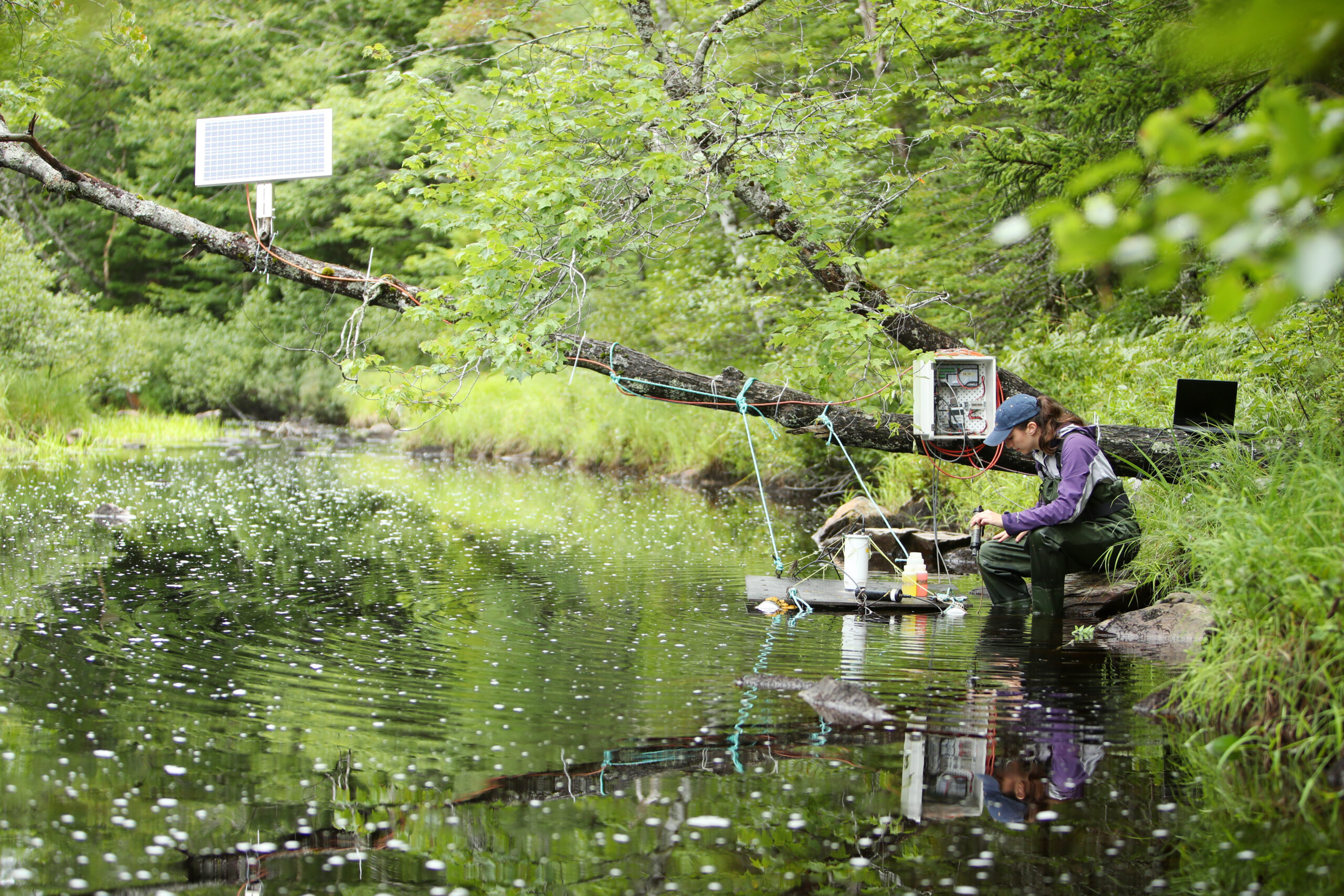
A CarbonRun employee checks prototype water quality sensors, circa 2021, used to monitor the effectiveness of adding alkalinity to rivers. Credit: CarbonRun
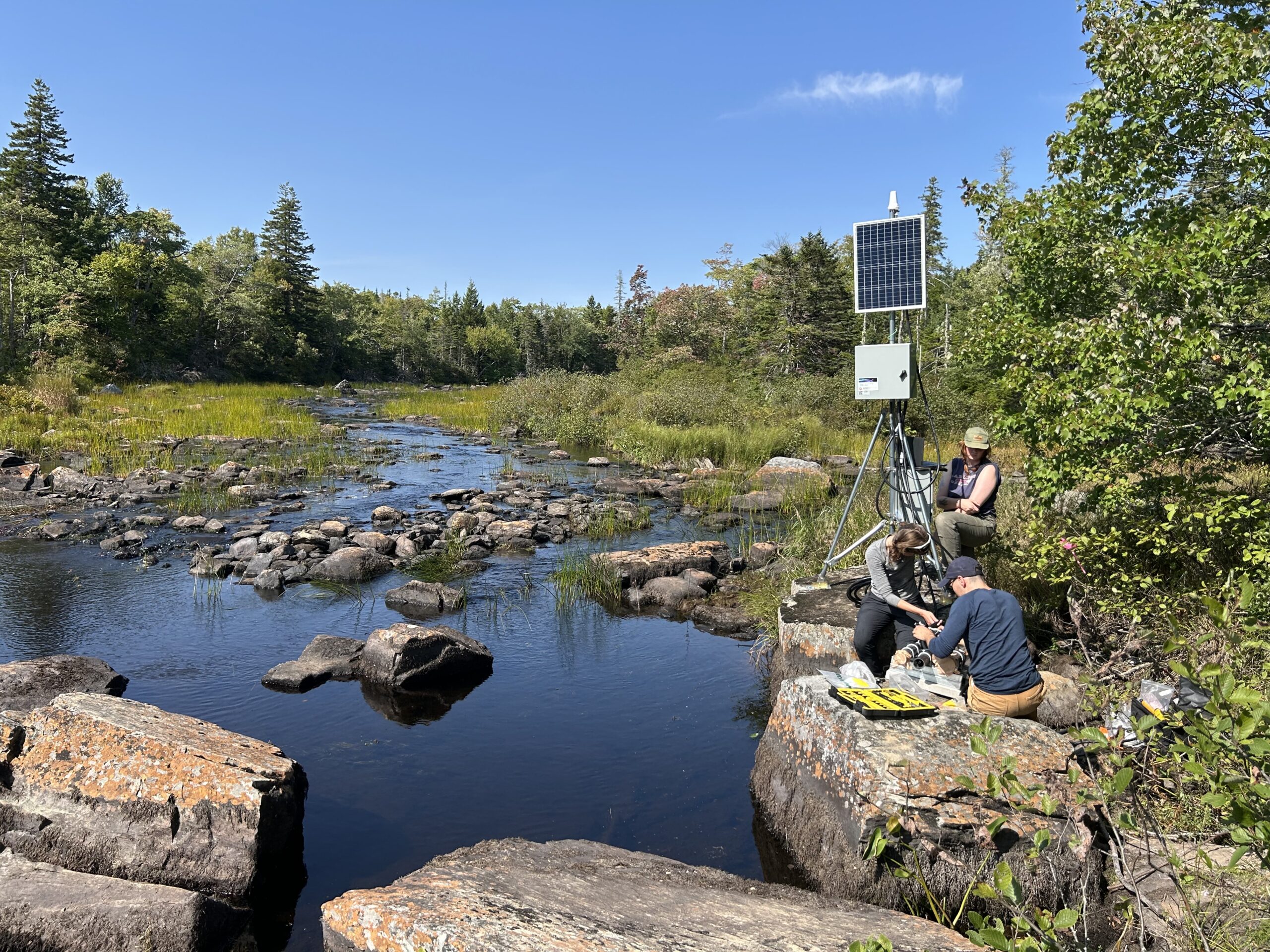
Since then, CarbonRun has developed novel, state-of-the-art sensing packages, pictured here in 2026. Credit: CarbonRun
Each CDR company in Halifax that Carbon Pulse spoke with – Planetary, CarbonRun, and pHathom – is at a different point in its journey, although they all suffer from regulatory uncertainty and they all recognise that how they go about business impacts the others.
CarbonRun operates in rivers, which are usually clearly jurisdictionally defined. The company’s practice of liming has also already been adopted at national-scale in the freshwaters of Norway and Sweden – a “three-decade head start”, Halfyard said – though not for carbon removal, but for freshwater restoration. It’s now on the company to prove that the practice removes CO2, too.
Both pHathom and Planetary already operate or aim to operate in the ocean at some point, but not presently at the scale to fulfill their respective carbon credit agreements.
“If one of us screws it up, we screw it up for all of us,” said pHathom’s Ray.
It’s not quite clear what failure might look like. In an industry built on the premise that there are billions of tonnes of CO2 that require removal to avoid dangerous climate change, success appears to be the only option. From here, it’s perhaps just a matter of how much, or how little, Halifax will play a part in it.
By Allison Gacad – [email protected]
This piece was supported by the Pulitzer Center, where Allison spent four months on a grant from February to June 2026 investigating mCDR.